
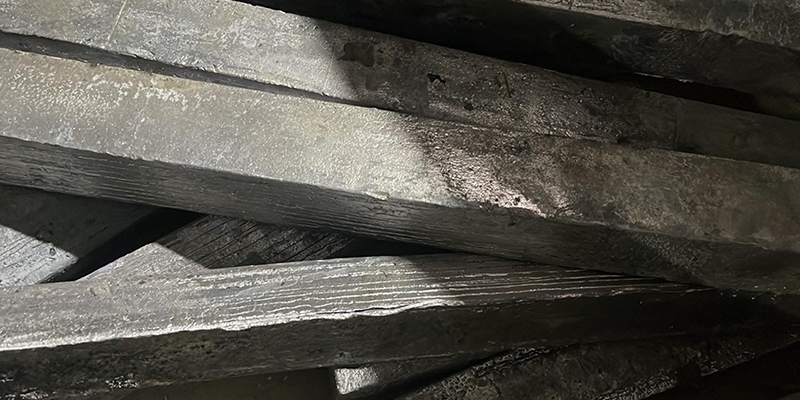
We buy all types of lead
Lead is a heavy metal with a silvery grey colour, relatively resistant to corrosion and oxidation It is soft and easily deformable, which makes it easy to form. It is an excellent conductor of heat and electricity.
Lead does not corrode because it forms a layer of lead oxide on the surface, protecting itself from further corrosion. However, it is reactive
in the presence of acids.
We buy:
- pure lead
- pokable lead
- Dirty lead
- lead granulate
- lead weights
- lead weights
Lead types:

Pure lead
This is lead in its pure form. It can be found in bars, castings, and other pure lead components. The material must not be contaminated with other metals or organic or non-organic substances.
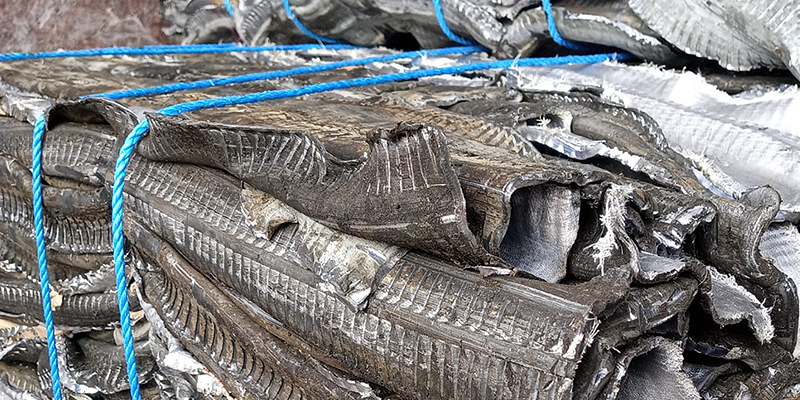
Pokable lead
This is recycled cable lead. It may contain antimony in its composition. This lead must not be contaminated with any substances, other metals or be greasy. It may contain traces of paper.

Lead dirty and with jute
It is recycled cable lead. It is contaminated with tar, glue
and possibly jute (Jute is a stem fibre produced from a plant of the genus jute).
Lead with jute has a lower price than dirty lead.

Lead granulate
It is recycled lead from recycled cables. It is in the form of granules, flakes with a diameter of
2 to 5 mm. It may be contaminated with trace amounts of copper. It must not be contaminated with non-organic substances and must not be greasy.
Lead buying - price
Pure lead and post-cable lead are the most expensive. The cheapest is lead with jute.
The price of lead scrap also depends on the price of lead on the LME (London Metal Exchange) , the euro exchange rate and the demand for lead scrap in the market.
Lead uses:
- Car batteries: Lead is commonly used in car batteries as an electrode. It creates chemical reactions that enable the storage and delivery of electrical energy.
- Painting pigments: Lead compounds, such as white lead, were used in the painting industry to produce white pigments.
- Spray booths for radiotherapy: Lead is used in radiotherapy to shield and direct radiation to specific areas of the patient's body during cancer treatment.
- Soldering and tinning: Lead alloying with other metals is used in the electronics industry for soldering and tinning.
