
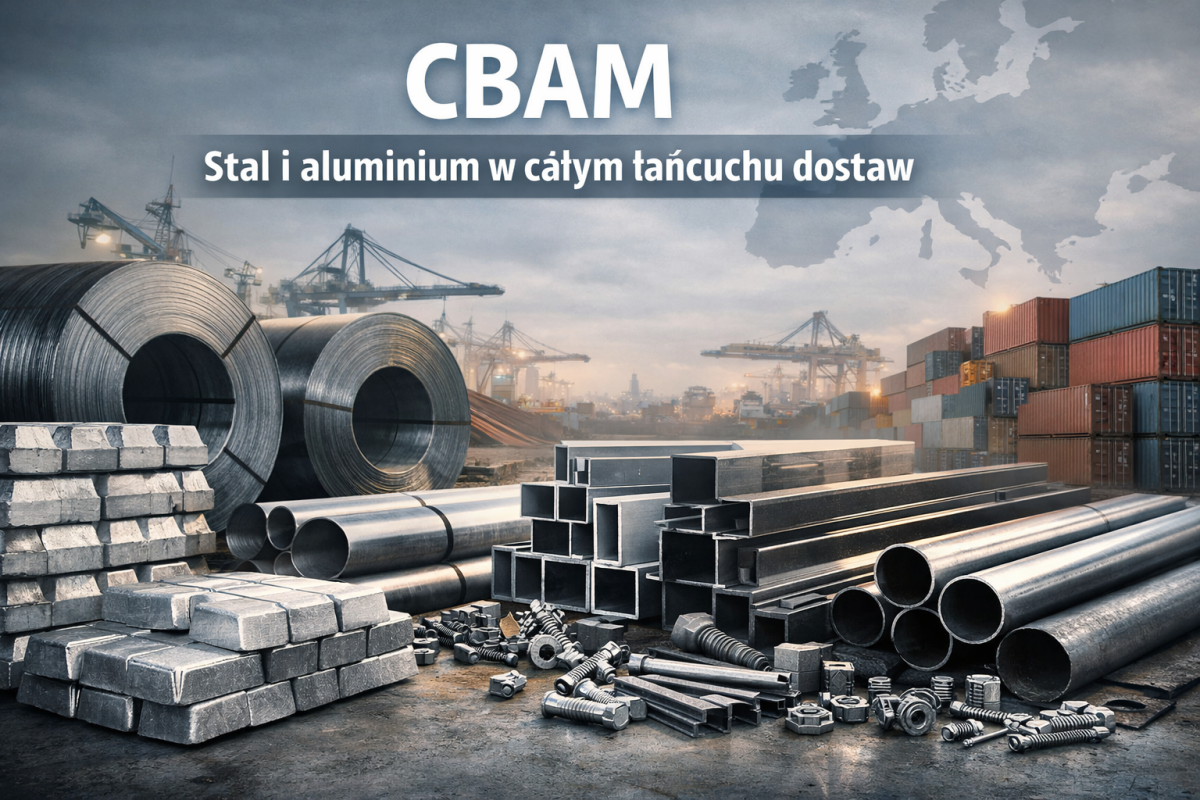
CBAM: extension of scope to steel and aluminium products - what does this mean for the market?
The European Commission has confirmed the direction of further development of the Carbon Border Adjustment Mechanism (CBAM). Following the inclusion of basic carbon-intensive raw materials such as steel and aluminium, legislative work and consultations on extending CBAM to more downstream products are ongoing.
This change could significantly affect supply chains in industry, construction, the engineering sector and industries using steel and aluminium components.
Current CBAM coverage
Currently, CBAM includes, among others:
iron and steel,
aluminium,
cement,
fertilisers,
hydrogen,
electricity.
From 1 January 2026, importers of these goods will be required to purchase CBAM certificates corresponding to the CO₂ emissions associated with their production outside the EU.
The European Commission's most advanced analysis concerns products falling under Chapter 73 of the Combined Nomenclature (CN), i.e. finished iron and steel products.
Among the categories that may be covered by CBAM are indicated:
Construction and infrastructure products
pipes, line pipes and hollow sections,
steel piles, beams, columns, bridge elements,
railway materials,
steel structures and prefabricated elements.
Tanks and technical components
tanks, cisterns, drums,
pressure vessels and gas cylinders.
Fasteners and small parts
bolts, nuts, washers, springs,
fasteners and connectors.
Wire and mesh products
wires, steel cables,
fences, nets, trusses.
Utility and industrial products
household goods,
cast iron and steel products,
The broad category of 'other articles of iron or steel'.
This extension would mean that CBAM would cease to apply only to crude steel and start to cover products present in the daily supply chains of industry and construction.
Planned expansion of CBAM - aluminium products
Analogous measures are being analysed for aluminium. In addition to primary aluminium and intermediates, the European Commission is considering extending CBAM to products containing aluminium as an essential functional component.
Potentially covered include:
Aluminium products and components
profiles, sections and structural elements,
parts of industrial machinery and equipment,
components used in construction and infrastructure.
Mixed products
A new category being analysed by the EC is products that are not entirely made of aluminium, but contain it in a way that is key to the product's function, such as:
fittings, hinges, guides,
furniture and construction elements,
fences, barriers, frames,
items of technical equipment
Machinery, equipment and means of transport
The extension of CBAM to selected ones is also being explored at a later stage:
-
-
industrial machinery,
-
energy and refrigeration equipment,
-
components for cranes, conveyors and transport systems,
-
selected vehicle components and electrical equipment,
if the steel or aluminium content and emissions intensity warrant inclusion in the mechanism.
-
What does this mean for the market?
The planned expansion of CBAM aims to:
-
-
reducing carbon leakage,
-
preventing CBAM from being circumvented by importing finished products,
-
strengthening the competitiveness of metal production and recycling in the EU.
-
Although these changes are not yet law, their direction is clear. For companies active in recycling, remelting and local steel and aluminium production, this means a significant strengthening of their market position in the medium to long term.
RMC Polska monitors CBAM legislative work on an ongoing basis and adapts its purchasing and operational strategy to the upcoming changes, supporting customers in trading metals safely and in compliance with regulations.
RM