
A step towards cleaning up the market or another barrier to business?
Unijny rynek surowców wtórnych od lat funkcjonuje w stanie pewnego napięcia pomiędzy potrzebą ochrony środowiska a realiami handlu i recyklingu. Z jednej strony mamy ambitne cele klimatyczne i hasła gospodarki obiegu zamkniętego, z drugiej – bardzo konkretną praktykę: ograniczoną liczbę instalacji, zmienną opłacalność przerobu oraz globalny rynek, który reaguje szybciej niż europejskie regulacje. W tym kontekście przyjęcie Rozporządzenia (UE) 2024/1157 nie jest zaskoczeniem. Jest raczej konsekwencją wieloletnich obserwacji, że dotychczasowe przepisy nie nadążają ani za skalą handlu odpadami, ani za nadużyciami, które pojawiały się w transgranicznym obrocie.
The new regulation formally replaces legislation that has been in force for almost two decades, but in practice it means much more than just updating it. In fact, it changes the philosophy of the approach to waste shipments - particularly in the context of exports outside the European Union. Until now, the system has relied heavily on declarations, paper documents and follow-up inspections. The new regulations clearly shift the burden of responsibility to the shipper, requiring not only correct documentation, but also real knowledge of what happens to the waste after it leaves the EU's borders.
Eksport odpadów poza UE – koniec dotychczasowych modeli biznesowych
The most noticeable change for the market will undoubtedly be the tightening of the rules for exports to third countries, especially those outside the OECD. In practice, this means that the mere existence of a recipient or an attractive price is no longer sufficient. It will be necessary to demonstrate that the installation in question meets environmental standards comparable to those of the EU and that the entire recovery process takes place in a controlled and safe manner.
This is a significant change that could permanently limit the outlets for some waste fractions - especially those that are more difficult to prepare or laden with contaminants.
Cyfryzacja, kontrole i odpowiedzialność po stronie wysyłającego
In parallel, the European Union is placing a strong emphasis on the digitalisation of procedures. Electronic systems for notification and tracking of shipments are not only supposed to streamline administration, but, above all, make the whole process more transparent. From the perspective of entrepreneurs, this means the end of a certain 'flexibility' to which the market has become accustomed over the years. Every transport will be traceable and possible irregularities will be much easier to spot. For companies operating in an orderly manner, this is good news; for others, it is a signal that existing practices may soon cease to be acceptable.

The strengthening of the role of inspection authorities and the announcement of stronger enforcement are also not insignificant. The new regulations envisage not only more frequent inspections, but also tangible sanctions. This is a clear signal that waste shipments are ceasing to be a 'background' area and are becoming one of the key elements of EU environmental policy.
However, it is worth emphasising that the regulation does not enter into force overnight. There will be a transitional period to allow companies to adapt their procedures, systems and business relationships to the new realities. It is worth making good use of this time - to analyse material portfolios, sales directions and the real capacity in Europe. In the long term, the new regulations may force not only formal changes, but also strategic decisions regarding the business model.
In summary, Regulation (EU) 2024/1157 is not a cosmetic adjustment of the legislation, but a clear signal of a change of direction. The EU is increasingly emphasising the need to keep secondary raw materials in its own market and to sort out global waste flows. For the recycling and trading industry, this means more obligations, but also more transparency and - in the long term - the chance of a more stable, predictable market. The question today is not whether these changes will happen, but who will be prepared for them.
What do the new regulations mean in practice for the non-ferrous metals market?
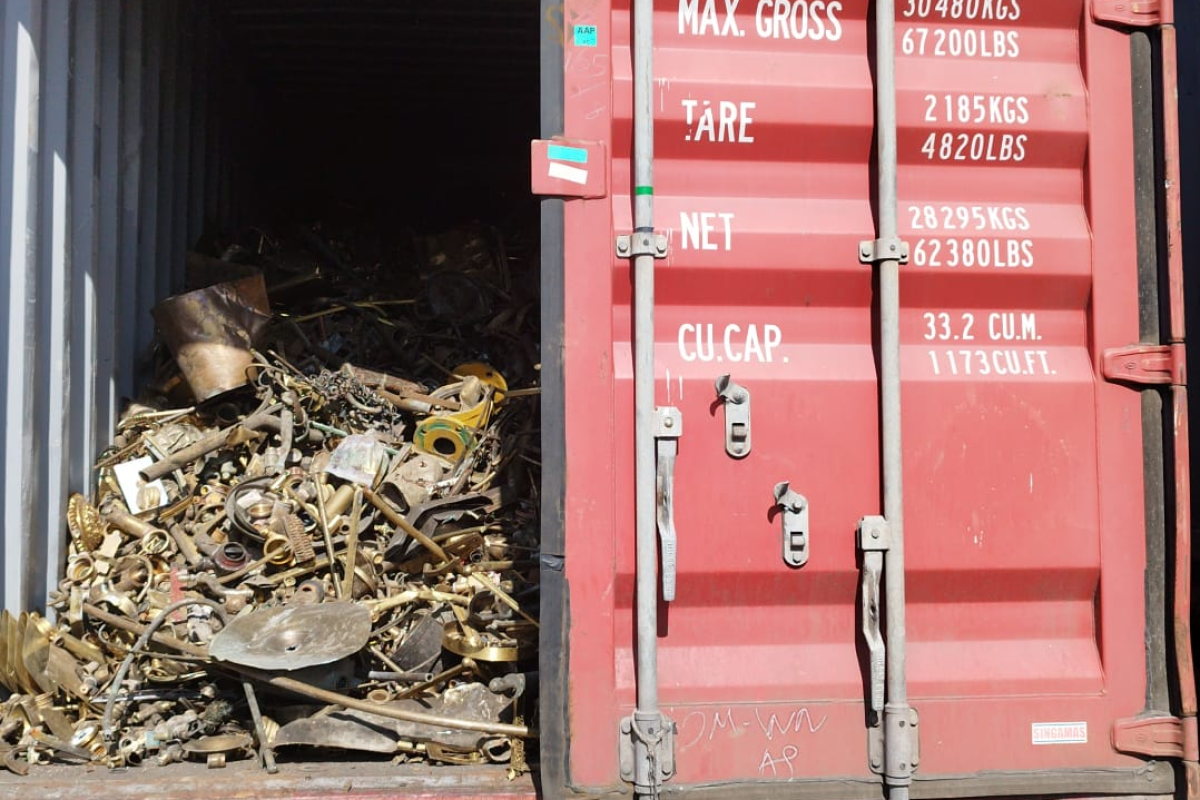
In the case of non-ferrous metals, the new regulations strike at the very core of the existing market model. For years, exports were a natural safety buffer - especially for difficult, contaminated fractions or those for which there was a lack of capacity in Europe or prices did not balance the cost of preparing the material. Asia acted as a safety valve: when the local market was unable to absorb certain grades, exports allowed liquidity to be maintained and losses to be limited.
The new legislation fundamentally changes this mechanism. The restriction on exports to non-OECD countries and the need to prove that the recipient meets environmental standards comparable to those of the EU means that trade ceases to be a simple commercial decision and becomes a regulatory process. In practice, this means that some of the materials that have so far found customers outside the EU will have to stay in Europe - regardless of whether there is a real demand for them and the infrastructure to process them.
Dla rynku aluminium jest to szczególnie istotne. Frakcje takie jak zorba, aluminium zanieczyszczone tworzywami czy odpady o niestabilnej jakości od lat funkcjonowały w modelu eksportowym. W Europie ich przerób bywa kosztowny, energochłonny i obarczony dodatkowymi wymogami środowiskowymi. Nowe regulacje nie eliminują tych problemów – one jedynie przenoszą je z rynku globalnego na rynek wewnętrzny UE. To oznacza presję cenową, konieczność renegocjowania kontraktów oraz rosnące znaczenie jakości sortowania i przygotowania materiału już na etapie skupu.
The position of foundries and processing facilities is also changing. In theory, the new regulations are supposed to support European recycling, but in practice they may lead to overloading of existing capacity. If more material is 'held back' in the EU and investment in new facilities does not keep up with the regulations, the natural result will be congestion, purchasing selectivity and greater pressure on margins on the part of suppliers. For trading companies, this means that they have to manage their material portfolio very precisely - not every raw material that can be bought will be equally easy to sell.
The aspect of regulatory risk is also not insignificant. Until now, many commercial decisions have been based on experience and relationships. The new regulations introduce an element of formal responsibility for the entire chain - from the point of waste generation to the final installation. This means that a trading partner's mistake, misclassification of a material or non-compliance of documentation can result in not only administrative but also financial consequences. In this sense, the market is becoming less 'intuitive' and more procedural.
On the other hand, the new regulations can clean up the market in the long term. Transparency, digitalisation and greater control eliminate some of the pathologies that have undercut prices and distorted competition over the years. Companies investing in quality, compliance and viable recycling stand to gain, especially if Europe actually decides to develop its own capacity. However, the pace of these changes will be key - regulation today is ahead of infrastructure, not the other way around.
In practice, this means one thing: the aluminium and non-ferrous metals market is entering a period of transition in which commercial experience is no longer sufficient. Procedures, risk analysis and a strategic approach to material right from the purchasing stage will become increasingly important. Companies that treat the new regulations purely as an administrative problem may quickly find themselves in a difficult situation. Those that seize the moment to sort out their processes and adapt their business model will gain an advantage in the new market reality.
New regulations do not change the market overnight, but they set a direction that can no longer be ignored. The movement of waste is no longer just a matter of logistics and price, but is becoming part of a broader strategy - regulatory, environmental and business. For the aluminium and non-ferrous metals industry, this means moving away from simple schemes that have worked well for years in the realities of global trade.
Sprawdź skup metali kolorowych w RMC Polska:
https://rmcpolska.pl/skup-cynku/
https://rmcpolska.pl/skup-cyny/
https://rmcpolska.pl/skup-miedzi/
https://rmcpolska.pl/skup-mieszaniny-metali/
https://rmcpolska.pl/skup-mosiadzu/
https://rmcpolska.pl/skup-olowiu/
https://rmcpolska.pl/skup-znalu/
The next few years will show whether the European market will actually manage to manage more recyclables within its own structures. One thing is certain: companies that already analyse their material streams, sales directions and regulatory risks today will be in a much better position than those that regard change as a distant administrative problem. The transition period is not a time to wait - it is a moment to sort out processes and make decisions that will prove crucial in the new market reality.
The market will not stop. What will change is the way it operates. And who will gain and who will lose from these changes depends largely on preparation - not only formal, but above all strategic.
Important dates:
20 May 2024. - entry into force of the regulations;
21 May 2026. - most of the new rules will take effect;
2027 and beyond - further export restrictions and environmental management evidence obligations.
Link to regulation Regulation - EU - 2024/1157 - EN - EUR-Lex
RM 8.01.2026