
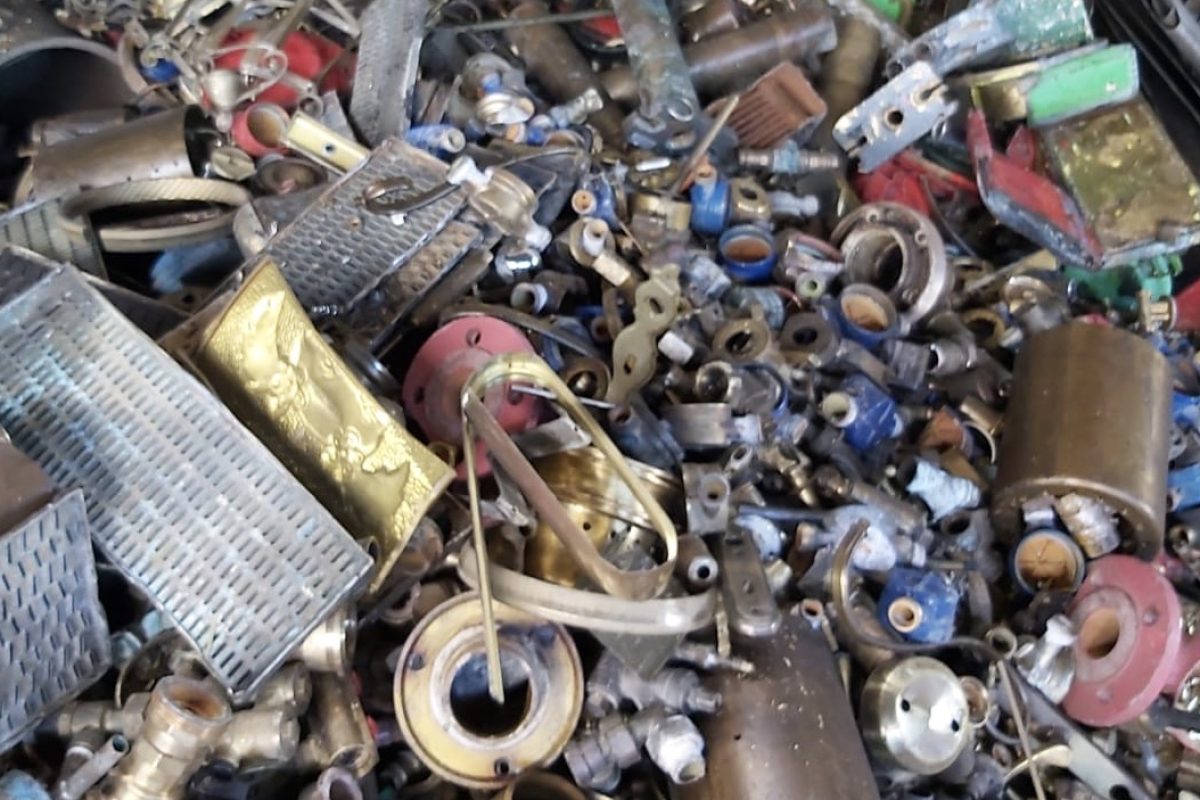
In an era of rising raw material prices and an increasingly environmentally conscious society, the scrap metal market is gaining importance. Buying and selling non-ferrous metals, including brassare not only an important part of the circular economy, but also a viable source of income for thousands of people - both individual collectors and small-scale collectors. However, for this activity to be truly profitable, a basic knowledge of what we are dealing with is essential. One of the key factors for profitability in this industry is the ability to distinguish between types of brass.
Brass - a material with many faces
Brass is an alloy of copper and zinc, often with a small addition of other metals. It comes in a wide variety of forms - from pipes and valves to coolers and fine metalworking chips. These differences are crucial when valuing the raw material. Unfortunately, for many beginners - both in collecting and the operation of collection centres - brass appears as a homogeneous material. However, the reality is much more complex.
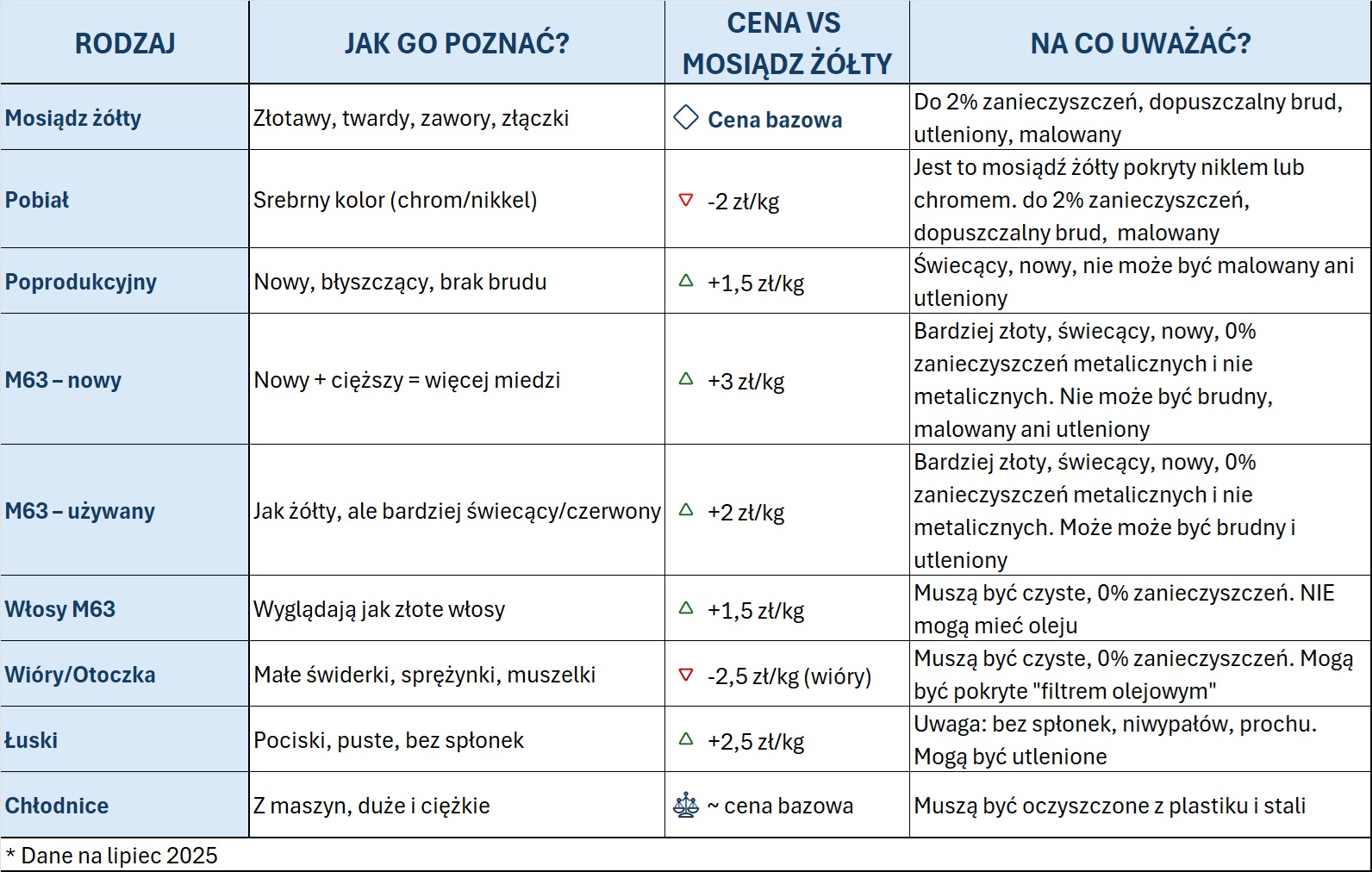
Prices of brass at the centres vary according to the content copper, level of cleanliness, origin and technical condition. For example: clean and unused brass (so-called post-production brass) can be worth several zlotys more per kilogram than the same alloybut already used, soiled or covered with paint. This distinction, seemingly minor, in practice can mean several hundred zloty difference in one delivery.
Knowledge as a source of profit
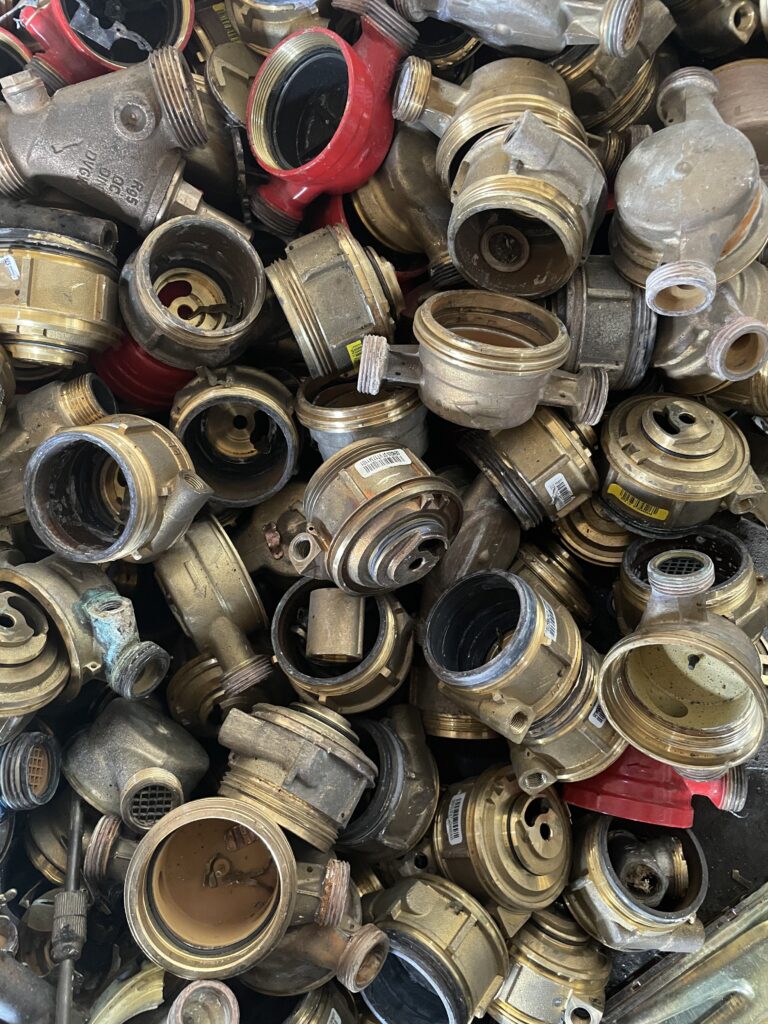
Recognition of individual brass types does not require specialised equipment or advanced technical knowledge. Simple principles and attentiveness are enough. For example: yellow brass, which is the most common, provides a reference point for other types. It is easily recognisable by its characteristic warm colour. Z brass whitewash, although it looks similar, contains a chrome or nickel coating and is clearly cheaper.
Even more pronounced price differences concern M63 brass - an alloy with a higher copper content (63%), which can be up to £3/kg more expensive than standard yellow brass, provided it is clean and non-oxidised. The same applies to brass shavings and 'hairs' from machining - their value is closely linked to the purity and absence of oil contamination.
So knowing these differences and being able to recognise them in the field becomes invaluable. It's not just about 'book' knowledge, but about practical skills that can be developed through observation, experience and working with professional buyers.
Ammunition shell brass - responsibility and safety
Among the more unusual types of brass include ammunition casings. While their value can be very high, they also carry potential risks. They must be completely cleaned of gunpowder residue, with no traces of unexploded shells or primers. Skups - such as RMC Poland - They only accept this type of material if it meets certain safety standards. This is another argument for scrap metal suppliers to know exactly what they are offering - for their own safety and for the sake of scrap metal collectors' employees.
Professionalisation of scrap metal collecting
Knowledge of brass is also a step towards professionalising the entire industry. Both collectors and small collectors should be aware that well-prepared material is more readily accepted and better valued. A professional approach here means not only the segregation of metals, but also their cleaning, proper packaging and the elimination of unnecessary impurities.
Scrap collection ceases to be a casual activity - it becomes a craft that requires knowledge, responsibility and care. And where there is quality - there is also value. Everyone benefits from this approach: suppliers, collectors and the environment.
Recognising types of brass is not just a technical skill - is a real opportunity to earn more and build trust in business relationships. For RMC Poland Supplier education is a priority - because we know that honest relationships start with knowledge.
Therefore, we encourage all those who come into contact with non-ferrous metals to learn the basics and deepen their practical knowledge. Because brass - although it seems inconspicuous - can be a source of steady and decent income. It is enough to know how to recognise it.
Other non-ferrous metals in stock
- https://rmcpolska.pl/skup-brazu/
- https://rmcpolska.pl/skup-cynku/
- https://rmcpolska.pl/skup-cyny/
- https://rmcpolska.pl/skup-miedzi/
- https://rmcpolska.pl/skup-mieszaniny-metali/
- https://rmcpolska.pl/skup-olowiu/
- https://rmcpolska.pl/skup-znalu/
July 2025 - RM