

In the e-waste market, the biggest financial losses are not due to technology, but to mixing. Someone collects electronic equipment, throws everything into a single bag, and calls it „e-scrap” and hopes that the reader will „work it out somehow”. They will. Only usually to their own advantage.
Microscraping It was created specifically to address this problem. It is an approach in which you do not trade in „electronics”, but in vehicles of value – distinct micro-fractions that the market understands, is able to verify and value fairly.
What is microscraping?
Microscraping is a practical method for dealing with e-waste, which involves separating the stream into fractions with a predictable composition – rather than selling a single, heterogeneous „blend”.
In a nutshell:
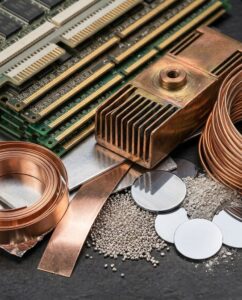
you don’t sell „mobile phones”, but rather, for example,. PCBs in classrooms + connectors/contacts + magnets + selected components,
you don’t sell „electronics”, but rather material prepared for a specific processing technology.
This is urban mining In practice: fewer slogans, more figures and consistency.
What is microscraping?
Microscraping It doesn’t start with a hammer and a screwdriver. It starts with thinking like both a salesperson and a technician at the same time.
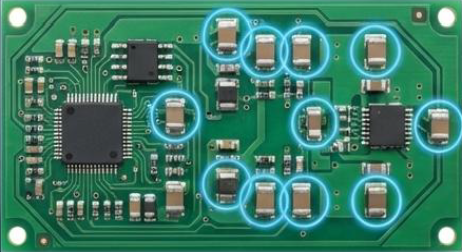
In microscraping It starts with the question: where in a given stream is the metal carrier? Below, we describe, step by step, how to get started with microscraping.
1) Identification of value drivers
In e-waste, value is concentrated in a few typical areas:
connectors and contacts (where there are coatings and contacts),
PCB (but there are different grades – ‘high grade’ is not the same as ‘low grade’),
circuits and modules (depending on the current),
MLCCs / selected SMD components (only if you have sufficient volume and a sales plan),
NdFeB magnets (the main application of REE in electronics),
sometimes LCD/ITO (ind) – but it’s the whole supply chain that matters here.
Don’t try to do everything at once. Microscraping makes sense when you choose the factors that actually make a difference, rather than those that just „sound good”.
2) Sorting and dismantling – only where it makes sense
This is where many companies make a mistake: they do too much manual work without calculating the cost.
Microscraping isn’t about „going all out”. It’s about:
we single out what offers the best value for the work involved,
We’ll leave the rest in the stream, which has an audience anyway.
The best implementations start with 2–3 fractions. The rest follow later.
3) Standardisation of fractions
This is the element that distinguishes „segregation” from microscraping.
Standardisation means:
clear definitions of classes (e.g. PCB high/med/low),
standardised packaging and labelling,
pollutant limit,
batch consistency.
The market rewards predictability. If a consignment is predictable, the buyer does not need to „hedge” against price fluctuations.
4) Sale of fractions to the relevant customers
The biggest mistake in the e-scrap trade: wanting to sell everything to a single buyer „because it’s easier that way”.
Microscraping works the other way round:
Each faction goes where it makes sense in terms of technology and cost,
and you stop paying the margin „for the risk of an unknown composition”.
Where can I sell the items I’ve collected?
Microscraping in practice It all boils down to one question: where to sell the separated fractions so as not to lose value „in the mix”. PCBs, connectors/contacts, MLCCs, NdFeB magnets and tantalum components only make sense if they reach a buyer who understands their value and has the right processing capabilities.
That is why the natural partner is RMC Poland – because we specialise in the trade and management of such material fractions: correct classification, batch standards, logistics and matching the right customer to the material all contribute to better pricing and stable sales. In short: you’re not selling e-scrap – you’re selling a product, and we help you do it in such a way that the value remains on your side.
If you’d like to see how microscraping works in practice, take a look at our presentation. In it, we show exactly where the value lies in electronics, which components are worth separating (from PCBs and connectors to MLCCs and NdFeB magnets), and how to organise this so that the material becomes a marketable product rather than a „mixed bag”. There are also figures, examples and straightforward implementation logic – so that you can immediately translate this into a realistic valuation and sales strategy.
Watch the presentation and find out which fractions in your stream can make the biggest difference.
RM 3 January 2026