

Experiences of scrap metal theft that are worth sharing
The metals market – particularly aluminium and its derivatives – is a demanding one today. Not only in terms of capital and operations, but also in terms of safety. I am writing this not to scare anyone, but to share a real-life experience that affected us directly and from which – despite the costs – we have drawn very specific conclusions.
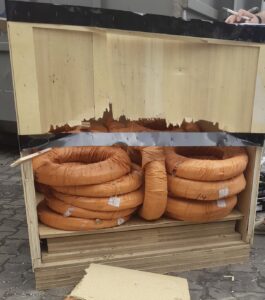
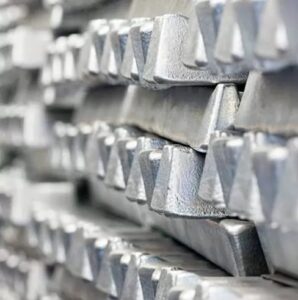
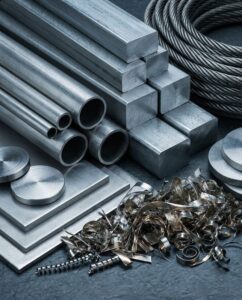
An aluminium goose has recently been stolen manufactured at our foundry. The goods were intended for a regular customer. A standard operation: we commissioned a haulage contractor to organise the transport; the vehicle was correctly notified; the registration numbers of the tractor unit and semi-trailer matched the documents; the lorry arrived on time; and the loading went smoothly. And… that was the last time we saw that consignment.
How does this mechanism work?
With the benefit of hindsight, it is clear that this was a well-organised scheme, based on creating a false impression and buying time. The driver who collected the goods behaved in a way that we would now unequivocally recognise as a warning sign – but at the time, we did not attach the proper importance to it.

It was summer, yet the driver kept his hood up the whole time. He was clearly nervous, avoiding the cameras, turning his head away as he passed them, and keeping a close eye on his surroundings. We now know that there was only one reason for this: to make identification more difficult.
When the delivery failed to reach the recipient, the classic race against time began. The driver’s mobile was switched off. A representative from the transport company answered calls, explained that the driver was „suddenly unwell” and assured us that the goods would arrive the following day. They didn’t. The next day, the phone was no longer active.
What did the investigation reveal?
The matter was reported to the police. During the investigation, it was established that the number plates had been changed four times during the journey. Ultimately, the lorry itself was recovered – without the trailer or the goods. The driver was arrested, but he did not admit guilt and refused to make a statement.
In the course of the police investigation, another crucial fact came to light, illustrating the scale and level of organisation of this scheme. It transpired that the haulage company which, on paper, had carried out the transport, had in fact been „stolen”. It was an entity which had not been actively engaged in transport operations for some time, yet still possessed all the necessary credentials: a licence, valid insurance, an operational history and company documentation. The owners, treating it as a „dormant” company, were planning to sell it.
At this point, a purported prospective buyer came forward and asked for the company’s documents to be sent to them for analysis. These documents – provided in good faith – were subsequently used to impersonate a legally operating transport company. On this basis, the perpetrators authenticated themselves to the freight forwarder by sending a set of genuine documents which, from a formal point of view, raised no suspicions whatsoever.

Based on the information it had received, the freight forwarding company commissioned the transport to a company which, on paper, existed and appeared to be reliable – but in reality no longer had any connection with the company’s actual owners.
Furthermore, during the course of the case, it was confirmed that the lorry used for the transport had been stolen, and that the entire operation – from the provision of the vehicle, through the changing of the number plates, to the disappearance of the goods – had been planned well in advance.
Check it out waste transport on RMC
At the same time, we set the insurance claims process in motion – and this is where we were in for another, very costly lesson.
Although the carrier’s policy’s name suggested cover for both domestic and international transport, its exclusions applied solely to international transport. Claim for compensation – rejected.

The next step was the freight forwarder’s insurance policy. And here we came up against the insurer’s interpretation, according to which a company that had been operating as a freight forwarder for years had accepted a freight forwarding order, but… had not provided a freight forwarding service, only a transport service using a subcontractor. The argument: specific locations and times for loading and unloading. The result? Three appeals, a complaint to the Financial Ombudsman, and, to this day, no compensation has been paid.
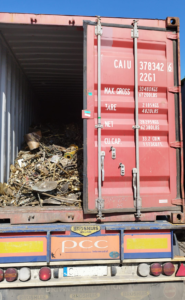
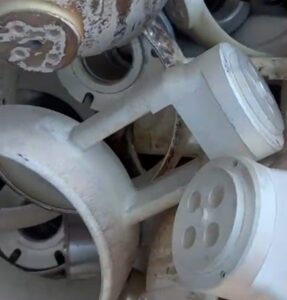
We eventually recovered the goods – they were found at one of the scrap dealers. Unfortunately, the gooseneck was broken, dirty and suitable only for remelting. Added to this were the financial costs: frozen funds, interest, lost profits and a delay in delivering the goods to the customer.
Why are we writing about this?
Because such experiences need to be passed on. The metals market is too capital-intensive for everyone to learn solely from their own mistakes.
Following this incident, we implemented in RMC Poland and, in our foundry, new, much stricter procedures:
- Before loading, we check the driver’s two identity documents and the registration certificates for the tractor unit and semi-trailer – refusal to allow this check means the load will not be loaded,
- The rooms where transport documents are issued are under CCTV surveillance – the driver must be filmed without a hood, cap or anything covering their face,
- we check number plates for signs of tampering or forgery,
- We analyse policies in detail – their geographical scope, value, definition of the service and exclusions of liability,
- We are making the team aware of the need to observe drivers’ behaviour – nervousness, avoiding cameras and time pressure are all red flags for us today.
This story ended relatively well for us – we recovered the goods. But the costs were substantial, and the risks very high. We are sharing this experience because we believe that professionalism in the metals industry is not just about prices, volumes and logistics, but also about awareness of risks and the ability to mitigate them.
If this article encourages even one company to review its pre-loading procedures – then it was worth writing about it
RM 27 January 2026