

New EU Regulation on the transboundary shipment of waste – Restrictions on waste exports from the EU
The introduction of Regulation (EU) 2024/1157 on the shipment of waste is often presented as the next stage in the digitalisation of administrative processes within the European Union. However, this view is not only an oversimplification but also a misinterpretation of the scale of the changes. The main argument of this paper is that the new regulations do not constitute a technical change, but rather a fundamental transformation of the way the waste market operates in Europe.
The first and most visible element of the reform is the introduction of a system DIWASS, which, from 21 May 2026, will become a mandatory tool for handling notification procedures. However, it would be a serious mistake to reduce this change solely to the digitisation of documents. DIWASS is not merely a communication platform – it is a supervisory tool that allows administrative authorities to access data on waste movements in real time. As a result, every shipment subject to the notification procedure must not only be reported, but also be fully transparent and verifiable in real time. This brings to an end the previous practice based on partial discretion and operational flexibility.
The second significant aspect of the changes is the redefinition of the role of the notification procedure. Until now, it had in many cases been treated as a formal administrative requirement. The new regulation assigns it a completely different function – it becomes the primary mechanism for market control. The obligation to conduct the entire process digitally eliminates alternative forms of communication and limits the scope for interpreting the regulations at an operational level. Any discrepancy in waste classification, any inconsistency in data or any omission of required information may result in an immediate response from the supervisory authorities.

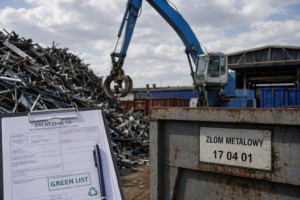
Against this background, the issue of Annex VII documents, which relate to waste from the so-called, takes on particular significance. green list. Although a transitional period has formally been provided for until 31 December 2026, allowing the existing arrangements to continue to be applied, this does not alter the regulatory direction. From 1 January 2027, these shipments will also be subject to full digitisation and integration with the DIWASS system. This marks the end of the model under which the trade in ‘green list’ waste took place with a limited level of control. In practice, the supervision standards for both main categories of waste will be brought into line.
A further argument supporting the systemic nature of the changes is the new regulations concerning selected waste streams, in particular plastics. The introduction of a notification requirement for all shipments of such waste sends a clear signal as to the direction in which the legislator is heading. This is a model based on full traceability and strict control of waste flows, which may be extended to further categories of materials in the future.
When analysing the new regulations, one cannot overlook their broader regulatory objective. The Regulation is not limited to streamlining procedures – its aim is to curb the uncontrolled export of waste, increase the accountability of operators involved in waste trade, and ensure compliance with European environmental standards. In this context, digitalisation is merely a tool that enables these objectives to be enforced more effectively.
In my view, the entry into force of the new regulations on 21 May 2026 should be regarded as a turning point for the entire industry. The obligation to use the DIWASS system in notification procedures and the planned full digitisation of Annex VII documents from 1 January 2027 (operations may continue without DIWASS until 31 December 2026) will lead to a fundamental change in the way the market operates. The existing model, based on operational experience and relationships, is being replaced by a system in which data, compliance and transparency are of paramount importance. In this sense, the new regulation is not merely a change in tools – it is a redefinition of the rules of the game.
The contents of the DIWAS implementation report dated 27 March 2026:
RM