

New EU regulations will change the way companies design, purchase, document and account for packaging. For industry and the recycling sector, this is not only an obligation but also an incentive to streamline the material cycle.
Cardboard box, tape, label, stretch film, pallet. In day-to-day business, we treat packaging as the technical backdrop to the actual product. The PPWR Regulation turns this perspective on its head: the packaging itself becomes a product, the composition, design, recyclability and market journey of which must be deliberately designed and documented.
Regulations governing warehousing, production and management
Regulation (EU) 2025/40 of the European Parliament and of the Council on packaging and packaging waste, known as the PPWR, will, in principle, apply from 12 August 2026. However, this regulation is not limited to manufacturers of bottles or cartons. It covers all types of packaging and virtually the entire value chain: material manufacturers, brand owners, importers, online retailers, industrial plants, logistics providers, the HoReCa sector and recyclers.
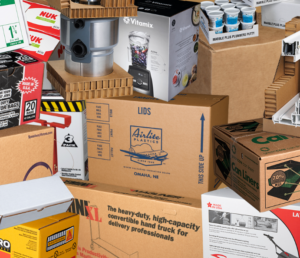
Just take a look at an ordinary parcel. The product is placed in a cardboard box, secured with packing material, sealed with tape and labelled with a shipping label. Each of these components has a specific composition and affects the material’s recyclability. PPWR therefore raises the question not only of whether the packaging protects the goods, but also: what it is made of, whether it contains any restricted substances, how much material it actually uses, and what will happen to it after use.


First, the chemicals: what shouldn’t be in the packaging
One of the most specific requirements is the restriction of hazardous substances. The sum of concentrations lead, cadmium, mercury and hexavalent chromium in packaging or its components must not, as a general rule, exceed 100 mg/kg. From 12 August 2026, additional limits will apply to PFAS in packaging intended to come into contact with food.
This is an area where a supplier’s documentation is important, but should not be treated as a magic shield. If the material comes from an unreliable source, contains recycled content, or its composition varies between batches, the company should assess the risk and plan appropriate controls. A well-structured compliance system is not simply a matter of collecting declarations in a ring binder. It involves creating a coherent chain of evidence.

Less wasted space, more responsible design
The PPWR also touches on something every consumer recognises from their own experience: a small product travelling in a large box. From 2030, for bulk, transport and e-commerce packaging, the void ratio must, as a general rule, not exceed 50%. Importantly, fillers do not solve the problem — the space they occupy is also treated as empty.
However, the change is not simply a matter of reducing the size of cardboard boxes at any cost. The packaging must still protect the product, meet transport requirements and ensure safety. It is about striking the right balance: using exactly as much material as is needed, but no more. This is a task for designers, procurement, quality control and logistics all at once.
Recyclability must be a reality, not just a slogan
From 2030, packaging is to be designed with recycling in mind and classified according to its recyclability. From 2035, there will be a requirement for large-scale recycling, meaning not only the ability to process the material under laboratory conditions, but its actual recovery within a functioning collection, sorting and recycling system.
This is a very significant difference. Packaging that is theoretically recyclable may prove problematic if it contains adhesive, a coating, a colourant or a multi-layered structure that is difficult to separate, or a label that interferes with the sorting process. In a circular economy, it is not declarations of intent that count, but the practical ability to recover the material.

The declaration of conformity begins with the supplier, but it does not end there
The packaging manufacturer will be required to carry out a conformity assessment, prepare technical documentation and issue an EU declaration of conformity. In the case of a complete packaging unit, the documentation should reflect its actual configuration; that is, it should cover not only the main material but also any components that affect its composition and recyclability.
A company that packages its own product will not always be the manufacturer of every component. However, it should clearly define its role and gather data from suppliers of cardboard, tape, labels, adhesives and fillers. If the packaging is designed or manufactured under a private label, responsibility may shift to the owner of that brand. Therefore, the most important first step is not to buy yet another ring binder for declarations, but to create a map of packaging, suppliers and responsibilities.
- Identify all types and variants of packaging used within the company;
- list their components, materials, suppliers and applications;
- determine who, for a given model, is the manufacturer, importer or distributor;
- collect specifications, declarations and test results;
- plan additional tests where documentation is missing or the risk is elevated;
- Introduce a procedure for checking changes to materials, formulations, suppliers and packaging designs.
The time has come for quality in recycling
The PPWR presents a challenge for the industry, but it could provide a strong impetus for growth in the professional recycling sector. Minimum recycled content levels in selected packaging made from plastics and recyclability requirements will increase the demand for secondary raw materials. However, it is not enough simply for the material to come from waste. Consistent quality, contamination control, proper sampling and data will be required to ensure the material can be safely used in the next production cycle.
It is precisely here that two worlds converge: regulation and materials technology. The regulations set out the objective, but it is the sorting, sample preparation, composition analysis and process control that determine whether the recovered material will actually become a valuable raw material.
How RMC Polska can support businesses
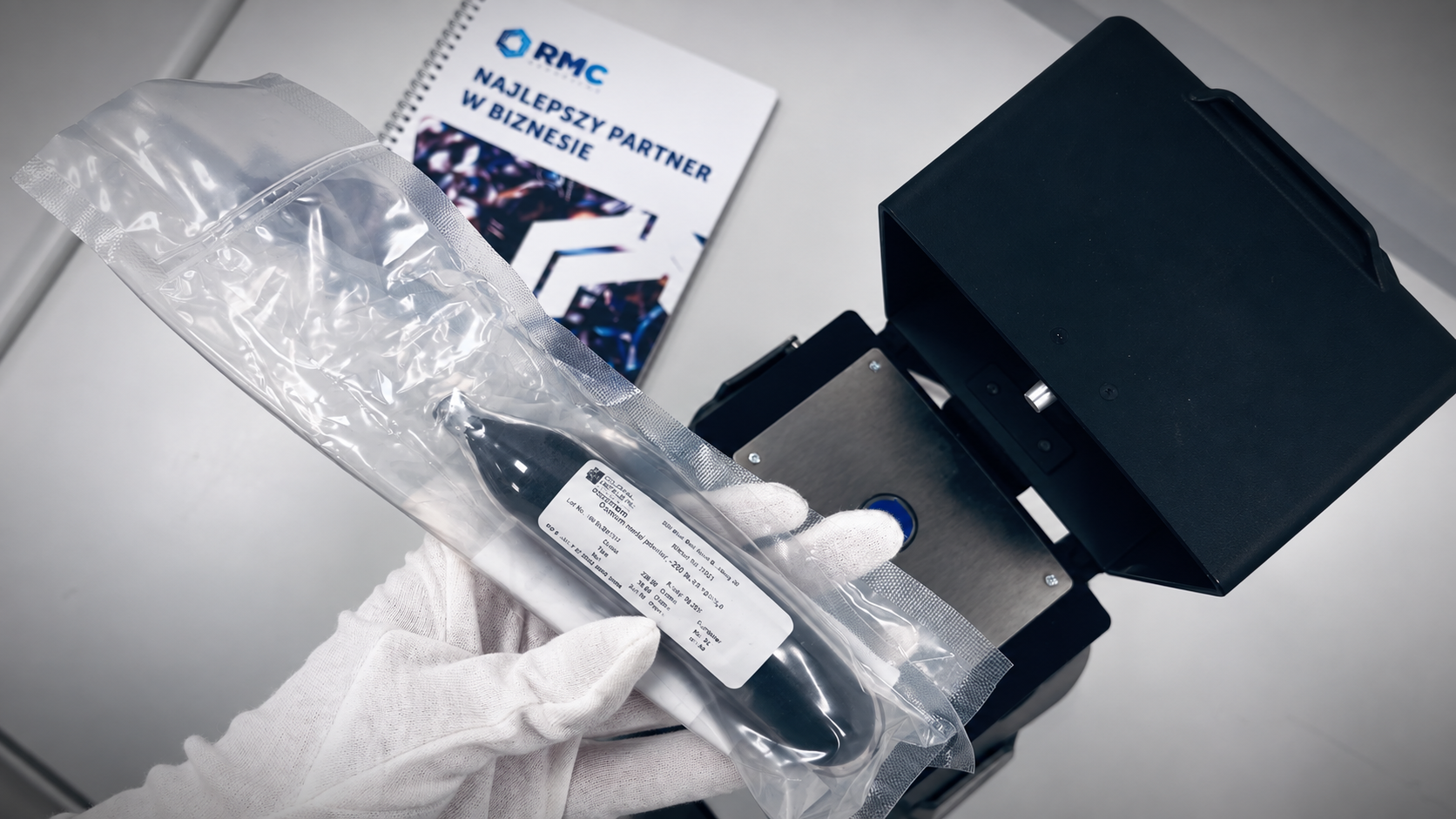
RMC Polska is expanding its laboratory facilities for the analysis of metals, waste and materials, utilising, amongst other techniques, XRF spectrometry and ICP-OES. In the context of PPWR, these capabilities can assist companies in assessing material composition, carrying out batch control, identifying elemental risks and preparing analytical data for use in quality management systems and technical documentation.
Not every answer can be provided by a single piece of equipment, and not every test results in a declaration of conformity. A professional approach begins with the right questions: what material are we testing, how was the sample collected, what limit do we wish to verify, and which method actually allows us to do so? RMC can help design this process, carry out tests within the scope of the methods at its disposal, and identify situations requiring specialist analyses, such as PFAS or chromium speciation.

It’s not worth waiting until the very last label
The PPWR will be implemented in stages, but it would be a grave mistake to assume that there is still plenty of time. Taking stock of packaging, obtaining documentation from suppliers, testing materials and redesigning configurations will take months. Companies that get started early can treat the regulation as an opportunity to reduce costs, simplify the number of packaging types and improve the quality of material data.
Because PPWR does not simply ask which bin the cardboard box will end up in. It asks whether it was designed from the outset to ensure that as much value as possible remains in the economy, whilst minimising waste. And this is a question to which European industry will have to respond not with a marketing statement, but with materials, processes and evidence.
RM 16 July 2026