

A step towards regulating the market or yet another barrier to business?
For years, the EU market for secondary raw materials has been caught between the need to protect the environment and the realities of trade and recycling. On the one hand, we have ambitious climate targets and the principles of the circular economy; on the other, we face very concrete realities: a limited number of facilities, fluctuating profitability of processing, and a global market that reacts more quickly than European regulations. In this context, the adoption of Regulation (EU) 2024/1157 This comes as no surprise. It is, rather, the result of many years of observation that the existing regulations have failed to keep pace with either the scale of the waste trade or the abuses that have arisen in cross-border trade.
The new regulation formally replaces the provisions that have been in force for nearly twenty years, but in practice it means much more than simply updating them. It changes the underlying philosophy behind the approach to waste shipments – particularly in the context of exports outside the European Union. Until now, the system has relied largely on declarations, paper documents and ex-post checks. The new regulations clearly shift the burden of responsibility onto the consignor, requiring them not only to provide correct documentation but also to have a genuine understanding of what happens to the waste once it leaves the EU’s borders.
Exporting waste outside the EU – the end of existing business models
The most significant change for the market will undoubtedly be the tightening of export rules to third countries, particularly those outside the OECD. In practice, this means that the mere existence of a buyer or an attractive price will no longer be sufficient. It will be necessary to demonstrate that the installation in question meets environmental standards comparable to those of the EU, and that the entire recovery process takes place in a controlled and safe manner.
This is a significant change which may permanently limit the disposal options for certain waste fractions – particularly those that are more difficult to process or contain contaminants.
Digitisation, checks and the sender’s responsibility
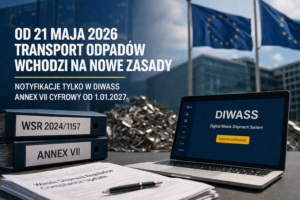
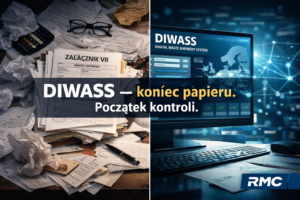
At the same time, the European Union is placing strong emphasis on the digitalisation of procedures. Electronic systems for notifying and tracking shipments are intended not only to streamline administration but, above all, to increase the transparency of the entire process. From the perspective of businesses, this marks the end of a certain degree of „flexibility” to which the market has become accustomed over the years. Every consignment will be traceable, and any irregularities will be much easier to detect. For companies operating in an orderly manner, this is good news; for the rest, it is a signal that current practices may soon cease to be acceptable.

The strengthening of the role of supervisory bodies and the announcement of more rigorous enforcement of the regulations are also significant. The new regulations provide not only for more frequent inspections, but also for sanctions that will have a tangible impact. This sends a clear signal that waste shipment is no longer a „back-burner” issue and is becoming one of the key elements of EU environmental policy.
It is worth emphasising, however, that the regulation does not come into force overnight. A transitional period has been provided for, which is intended to enable companies to adapt their procedures, systems and commercial relationships to the new realities. It is worth making good use of this time – to analyse your portfolio of materials, sales channels and actual processing capacity in Europe. In the longer term, the new regulations may force not only formal changes but also strategic decisions regarding your business model.
In summary, Regulation (EU) 2024/1157 is not a cosmetic amendment to the legislation, but a clear signal of a change of direction. The European Union is placing ever greater emphasis on the need to retain secondary raw materials within its own market and to regulate global waste flows. For the recycling and trading sectors, this means more obligations, but also greater transparency and – in the longer term – the prospect of a more stable, predictable market. The question today is not whether these changes will take place, but who will be prepared for them.
What do the new regulations mean in practice for the non-ferrous metals market?
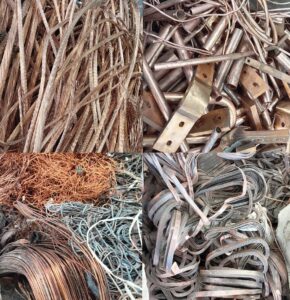
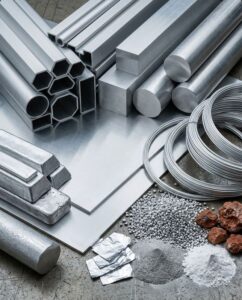
In the case of non-ferrous metals, the new regulations strike at the very heart of the existing market model. For years, exports served as a natural safety buffer – particularly for difficult or contaminated grades, or those for which there was a lack of processing capacity in Europe, or where prices did not cover the costs of preparing the material. Asia acted as a safety valve: when the local market was unable to absorb certain grades, exports helped maintain liquidity and limit losses.
The new regulations fundamentally alter this mechanism. Restrictions on exports to non-OECD countries and the requirement to prove that the recipient meets environmental standards comparable to those of the EU mean that trade is no longer a simple commercial decision, but becomes a regulatory process. In practice, this means that some materials which previously found buyers outside the EU will have to remain in Europe – regardless of whether there is genuine demand for them or the infrastructure to process them.
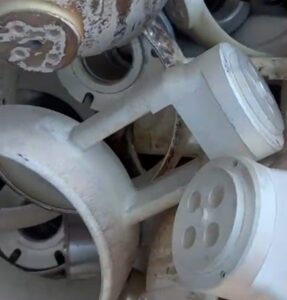
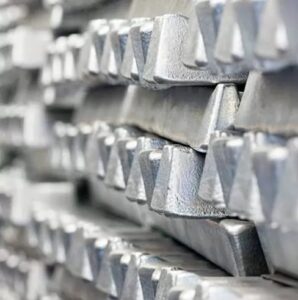
For the market aluminium This is particularly important. Materials such as scrap, aluminium contaminated with plastics or waste of inconsistent quality have for years been part of the export model. In Europe, processing them can be costly, energy-intensive and subject to additional environmental requirements. The new regulations do not eliminate these problems – they merely shift them from the global market to the EU’s internal market. This means price pressure, the need to renegotiate contracts and the growing importance of the quality of sorting and preparation of materials right from the purchase stage.
The position of foundries and processing facilities is also changing. In theory, the new regulations are intended to support recycling in Europe, but in practice they may lead to existing production capacity becoming overburdened. If more material is „retained” within the EU, and investment in new facilities fails to keep pace with the regulations, the natural consequence will be bottlenecks, selective purchasing and greater pressure on suppliers’ margins. For trading companies, this means the need for very precise management of their materials portfolio – not every raw material that can be purchased will be equally easy to sell.

The aspect of regulatory risk is also significant. Until now, many commercial decisions have been based on experience and relationships. The new regulations introduce an element of formal liability across the entire chain – from the point of waste generation to the final treatment facility. This means that a mistake by a trading partner, incorrect classification of material or non-compliance with documentation requirements may result in consequences that are not only administrative but also financial. In this sense, the market is becoming less „intuitive” and more procedural.
On the other hand, the new regulations may bring order to the market in the longer term. Transparency, digitalisation and greater oversight will eliminate some of the malpractices that have, over the years, driven down prices and distorted competition. Companies investing in quality, compliance and genuine recycling stand to benefit from this, particularly if Europe does indeed decide to develop its own processing capacity. The pace of these changes will, however, be crucial – at present, regulations are outpacing infrastructure, rather than the other way round.
In practice, this means one thing: the aluminium and non-ferrous metals market is entering a transitional period in which commercial experience alone is no longer sufficient. Procedures, risk analysis and a strategic approach to materials will become increasingly important right from the procurement stage. Companies that treat the new regulations merely as an administrative burden may soon find themselves in a difficult situation. Those that use this opportunity to streamline their processes and adapt their business model will gain an advantage in the new market reality.
The new regulations do not change the market overnight, but they set a course that can no longer be ignored. The movement of waste is no longer solely a matter of logistics and price, but is becoming part of a broader strategy – regulatory, environmental and business. For the aluminium and non-ferrous metals industry, this means moving away from the simple models that have worked well for years within the realities of global trade.
Find out about non-ferrous metal purchasing at RMC Polska:
https://rmcpolska.pl/surowiec/cynk/
https://rmcpolska.pl/surowiec/cyna/
https://rmcpolska.pl/surowiec/miedz/
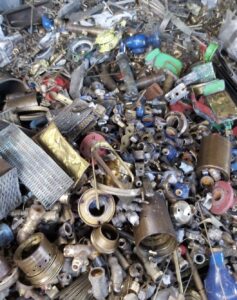
https://rmcpolska.pl/surowiec/mieszaniny-metali/
https://rmcpolska.pl/surowiec/mosiadz/
https://rmcpolska.pl/surowiec/olow/
https://rmcpolska.pl/surowiec/znal/
The coming years will show whether the European market will indeed manage to utilise a greater quantity of secondary raw materials within its own structures. One thing is certain: companies that are already analysing their material flows, sales channels and regulatory risks will be in a much better position than those that view these changes as a distant administrative problem. The transition period is not a time to sit back and wait – it is a time to streamline processes and make decisions that will prove crucial in the new market reality.
The market will not come to a standstill. However, the way it operates will change. And who stands to gain and who stands to lose from these changes depends largely on how well prepared they are – not just in formal terms, but above all in strategic terms.
Important dates:
20 May 2024 – the regulations come into force;
21 May 2026 – most of the new rules will come into force;
2027 and beyond – further export restrictions and requirements for evidence of environmental management.
Link to the regulation Regulation (EU) 2024/1157 – EN – EUR-Lex
RM 8 January 2026