

The European market plastics It has undergone a dramatic change in recent months. Until recently, the industry was operating in a climate of low prices, abundant supplies of cheap imported raw materials and significant pressure on the recycling sector. Today, the situation is completely different.
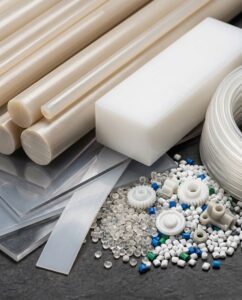
The conflict in the Middle East and the resulting disruptions to global supply chains very quickly had an impact on the petrochemical market. Prices of primary raw materials began to rise sharply, whilst the availability of materials such as PP, HDPE, LDPE, PET, ABS and HIPS deteriorated significantly. In many cases, the prices of virgin plastics rose several-fold within a very short period of time.
Changes in market conditions have led many manufacturers – who, until recently, had based their procurement strategies mainly on cheap imports of virgin materials – to start looking for alternatives closer to the European market. As a result, recycled materials have once again become the focus of the industry’s attention. Price rises for recycled materials are noticeable and reach 30%, but they are significantly lower than for virgin plastics. Furthermore, the market is beginning to face a situation where demand for recycled materials exceeds available production capacity.
Uncertainty is a further factor driving the market. An increasing number of companies are building up stocks of raw materials for fear of further price rises or supply issues. This, in turn, is driving prices up even further and increasing the pressure on European recyclers.
There is also a clear shift in the approach of end-users themselves. For many manufacturers, security of supply and the stability of the business relationship are becoming increasingly important, rather than simply the lowest purchase price. Discussions regarding long-term contracts for the supply of European recycled materials are becoming increasingly common.
The market is currently facing a major challenge. In recent years, the European recycling sector has been severely weakened by low margins, the closure of some plants and consolidation. Many facilities have scaled back production or ceased operations altogether. Restoring processing capacity and rapidly increasing the supply of recycled materials will therefore not be easy. An important factor in this regard is that, Europe is currently entering a period of significant regulatory change. New rules arising from the amended EU Waste Shipment Regulation will gradually restrict the export of plastic waste outside the European Union. This means that a greater quantity of material will remain on the European market and will have to be managed locally.
At the same time, a debate is ongoing regarding the future of the mandatory use of recycled materials in packaging and industrial products. Some international corporations are calling on the European Commission to relax or postpone some of the requirements set out in the regulation PPWR. The industry highlights implementation risks, limited availability of materials and the high costs of the transition.
This highlights one of the biggest problems facing the European recycling market, namely a lack of stability and predictability. As long as the use of recycled materials remains dependent primarily on the geopolitical situation, oil prices and short-term economic viability, the sector will remain highly vulnerable to sharp fluctuations.
One thing is certain, however — recycled materials are once again taking centre stage in the market. The question is no longer whether they will be needed, but whether the European recycling sector will be able to meet the industry’s growing demand.
RM 16 May 2026