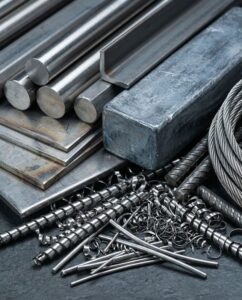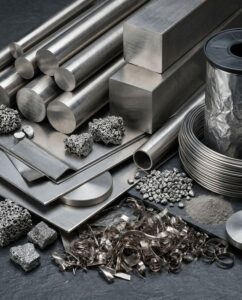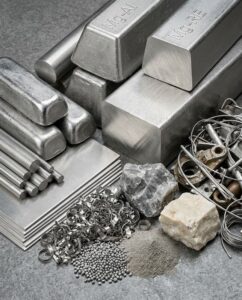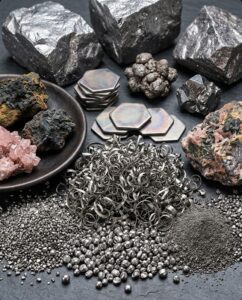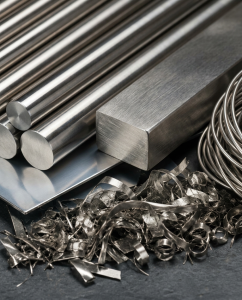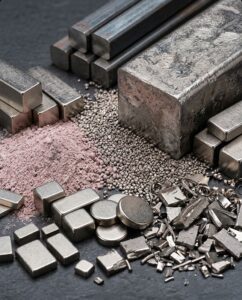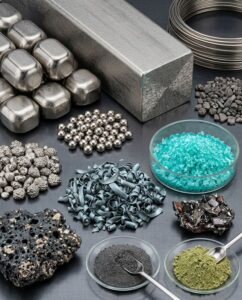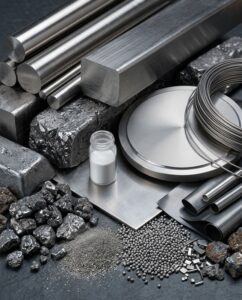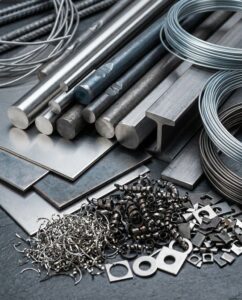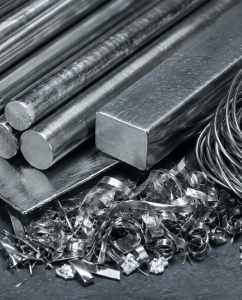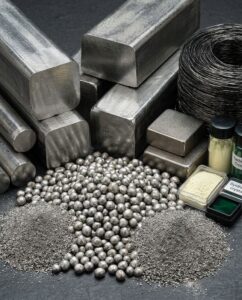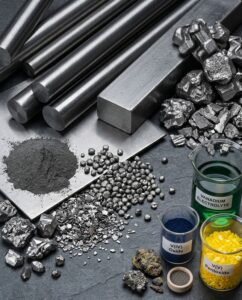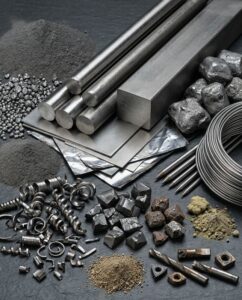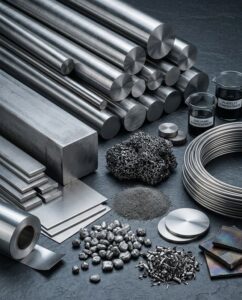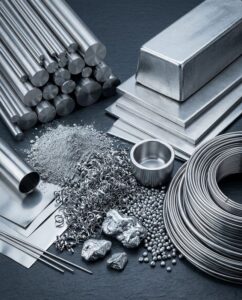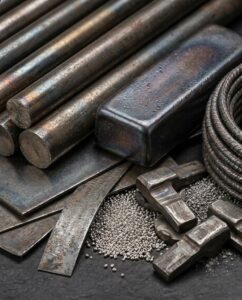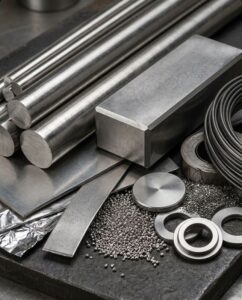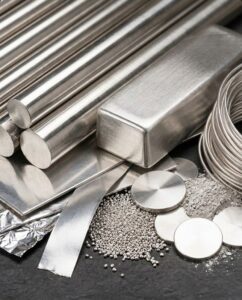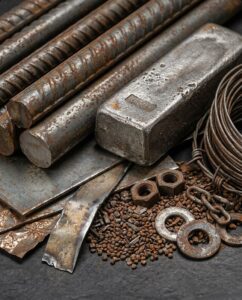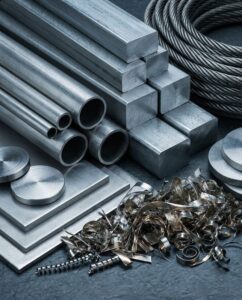


Stainless steel is one of the most important materials used in modern industry. It is used in construction, the food, chemical, energy and automotive industries, and in the manufacture of everyday items. Its popularity stems primarily from its resistance to corrosion, durability and the fact that it can be recycled repeatedly.
Although the term „stainless steel” is commonly used to refer to a single group of materials, it actually encompasses many grades with varying chemical compositions and properties. Two items that look almost identical may contain completely different amounts of nickel, chromium or molybdenum, and thus have a different value on the scrap market.
So why is it that not all stainless steel is priced the same, and what actually determines its value?
Depending on its intended use, other alloying elements are also added to steel. The most important of these are:
Chromium (Cr) – is responsible for the formation of the passive layer and corrosion resistance.
Nickel (Ni) – affects the internal structure of steel, improving its ductility, formability and performance characteristics. Thanks to its presence, common grades of stainless steel, such as 304 and 316, do not usually exhibit magnetic properties when annealed.
Molybdenum (Mo) – improves resistance to localised corrosion, particularly in environments containing chlorides.
Manganese (Mn) – it affects the structure and mechanical properties of steel, and in certain grades it allows the nickel content to be partially reduced.
It is precisely the differences in the content of these elements that mean that different grades of stainless steel have different applications and commercial value.
The most popular grades of stainless steel
There are many types of stainless steel on the scrap market, but a few grades are of particular commercial importance.
304 steel (1.4301) – a popular chromium-nickel steel
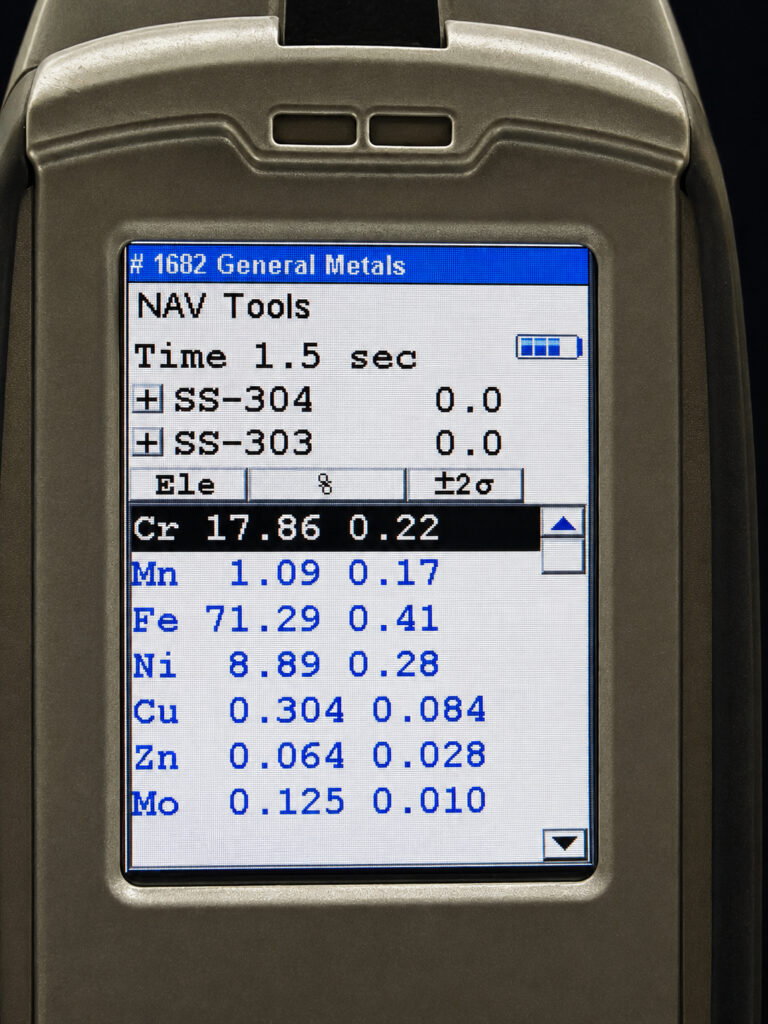
Grade 304 is one of the most commonly used stainless steels. It typically contains around 18% chromium and 8–10.5% nickel. Thanks to its good corrosion-resistant properties and ease of machining, it is used, amongst other things, in the manufacture of tanks, industrial plant components, catering equipment and domestic appliances.
On the scrap metal market, 304 steel is one of the main commodities. Its value stems not only from its iron content, but above all from the presence of valuable alloying elements, in particular nickel.
316 steel (1.4401) – greater resistance thanks to molybdenum
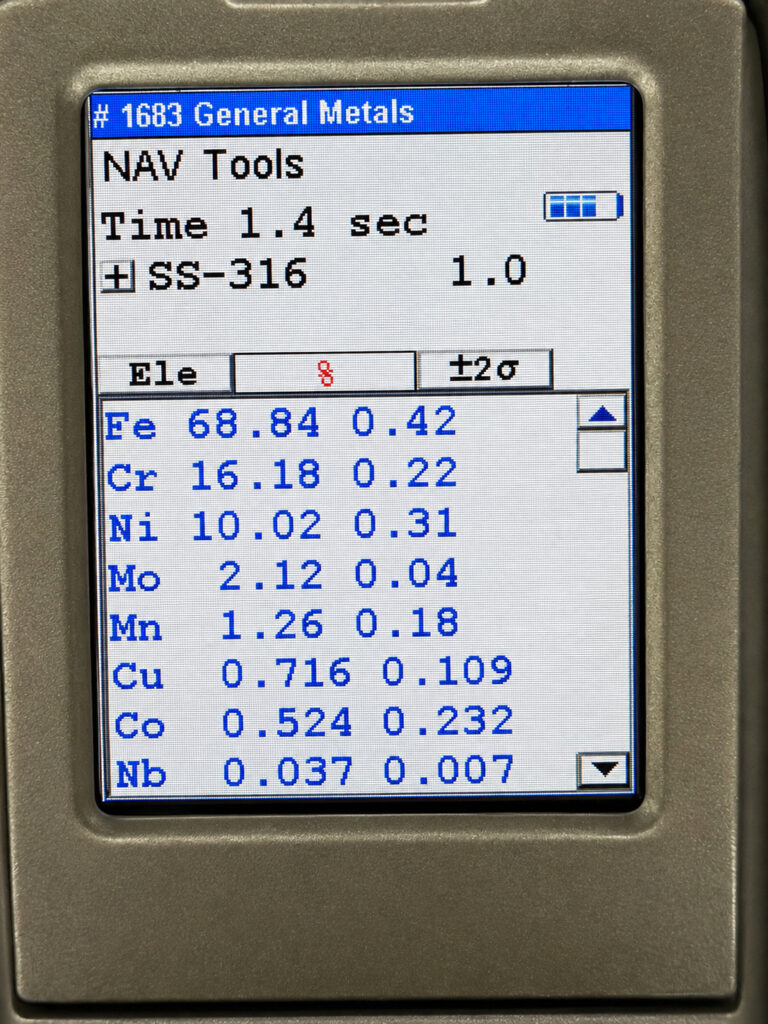
316 steel has a chemical composition similar to that of grade 304, but also contains approximately 2–3% molybdenum and, as a rule, a higher nickel content.
The addition of molybdenum significantly improves resistance to pitting corrosion, particularly in chloride-containing environments. For this reason, 316 steel is used in the chemical, pharmaceutical and marine industries, as well as in systems exposed to aggressive substances.
From a recycling perspective, the presence of molybdenum is also of significant economic importance. Given comparable quality and market conditions, 316-grade scrap generally fetches higher prices than 304 steel.
430 steel (1.4016) – stainless, but nickel-free
Grade 430 belongs to the ferritic steel group. It typically contains 16–18% chromium, whilst nickel is not a significant alloying element in it.
This steel is used, amongst other things, in household appliances, equipment casings and certain components of industrial installations.
Despite its corrosion resistance, its value on the scrap market is usually significantly lower than that of chromium-nickel steels. This is primarily due to the low content of expensive alloying elements, such as nickel and molybdenum.
This is a perfect example of how a material’s appearance and corrosion resistance alone do not determine its commercial value.
Why are the nickel and molybdenum contents so important?
In the stainless steel scrap trade, one of the most important factors affecting the price is the chemical composition of the material.
Nickel and molybdenum are raw materials used in the production of high-alloy steels. Their recovery through recycling helps to reduce the demand for virgin alloying materials.
For steelworks that use scrap as a raw material, it is therefore not only the mass of the material supplied that is important, but also the quantity and proportions of the elements it contains.
For example, a tonne of steel scrap containing 8% of nickel theoretically corresponds to 80 kilograms of that element. In the case of steel containing 12% of nickel, the figure would be 120 kilograms.
This does not, of course, mean that the entire nickel content is valued at its full market price. The valuation also depends on the alloy’s usability, technological losses, processing costs and current customer demand.
Molybdenum is of similar importance, as its presence can significantly enhance the appeal of certain grades of stainless steel.
Can you tell if something is made of stainless steel by using a magnet?
One of the most widespread beliefs is that stainless steel is not attracted to a magnet. In fact, this is not true.
Magnetic properties depend primarily on the metallurgical structure of the steel.
Austenitic steels, such as 304 and 316, are generally non-magnetic in the annealed condition, although they may exhibit some magnetic properties following intensive plastic working.
Ferritic steels, such as 430, are magnetic despite their corrosion resistance.
This means that a simple test using a magnet may be useful during the initial sorting of the material, but it does not allow for an unambiguous determination of the grade of steel or its value.
Spectrometric analysis – the basis for accurate identification
In the professional scrap metal trade, the accurate identification of a material’s chemical composition is becoming increasingly important.
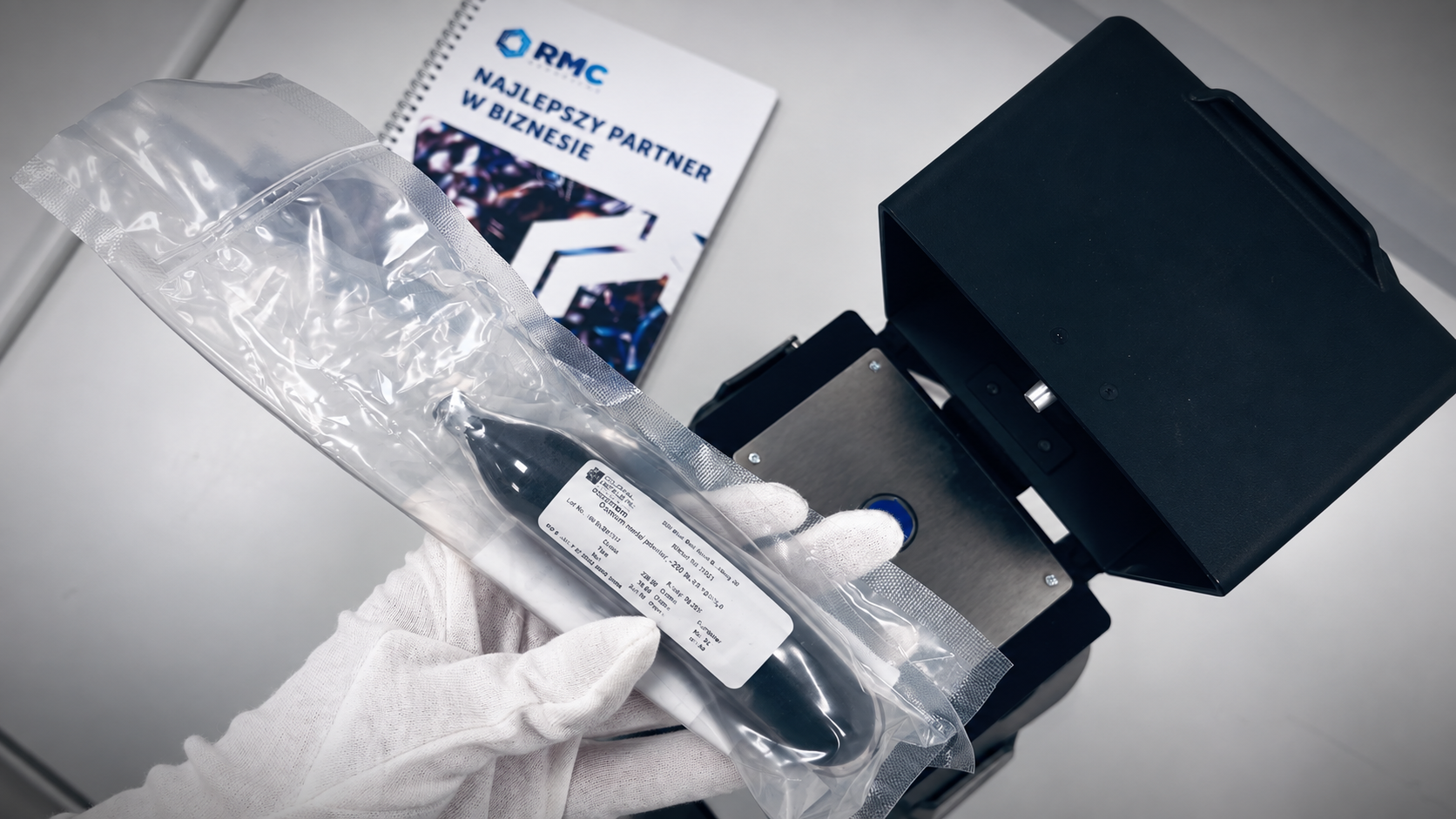
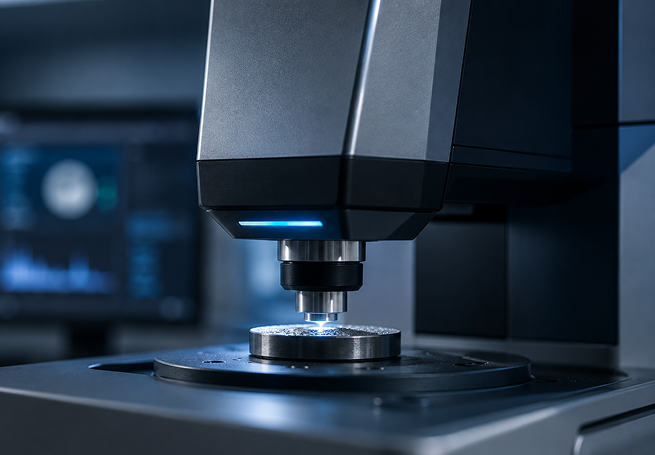
One of the most commonly used methods is analysis using portable X-ray fluorescence (XRF) spectrometers.
These instruments enable the rapid determination of the content of many alloying elements, including chromium, nickel, molybdenum and manganese.
This makes it possible to distinguish between common grades of steel, such as 304 and 316, which are virtually impossible to identify by their appearance alone.
However, the XRF method also has its limitations. A standard portable analyser cannot determine the carbon content; therefore, an XRF analysis alone is not sufficient to confirm the differences between grades 304 and 304L or 316 and 316L. In such cases, it may be necessary to use other analytical methods or relevant material documentation.
In our view, the best spectrometer for analysing acid-resistant steel is the Elvatech Advanced handheld spectrometer, which can carry out a measurement in 2–3 seconds, identifying key elements, including mercury (Hg), the presence of which in steel is unacceptable.
Accurate chemical analysis reduces the risk of misclassification, enhances the transparency of transactions and enables a more precise valuation of the raw material.
What else affects the price of stainless steel scrap?
Chemical composition forms the basis for valuation, but it is not the only factor determining the value of a material.
Its form, degree of contamination and method of preparation for further processing are also of great importance.
Homogeneity of the material
A consignment of scrap containing a single, correctly identified grade of steel is usually more attractive to the buyer than a mixture of different alloys. Homogeneity facilitates the planning of the smelting process and reduces the need for further sorting.
Pollutants
The presence of elements made of ordinary steel, other metals, plastics, oils or processing residues may reduce the value of the material. In some cases, it also requires additional preparatory operations.
Form of scrap metal
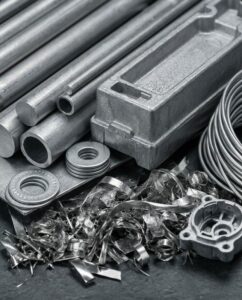
Sheets, pipes, structural components, castings and machining swarf may be valued in different ways. Particular attention must be paid to swarf, which may contain coolants, moisture and other contaminants generated during machining.
Volume and regularity of deliveries
For industrial customers, batch size, the regularity of deliveries and the ability to maintain consistent quality standards are also important.
Current market situation
The prices of nickel, molybdenum and other alloying materials, exchange rates, demand from the steel industry and logistics costs all influence trading conditions. Consequently, the price of stainless steel scrap may fluctuate even when its chemical composition remains unchanged.
Why does proper waste sorting have economic significance?
In manufacturing companies, stainless steel waste is often generated as a result of cutting, stamping, machining or the modernisation of industrial plant.
If different grades of steel end up in the same container, separating them later may require additional work and testing.
Furthermore, mixing materials with a high nickel or molybdenum content with cheaper grades may limit the ability to obtain a price that reflects the value of the individual alloys.
Proper waste sorting at the point of generation therefore not only streamlines the recycling process but also increases potential revenue from the sale of scrap metal.
In practice, this means that the proper organisation of metal waste management can have a direct impact on a company’s financial performance.
Stainless steel as a valuable source of secondary raw materials
The recycling of stainless steel plays a significant role in the raw materials economy. Thanks to the possibility of reusing alloying elements, this material retains its value even after the end of its service life.
Recovering the chromium, nickel and molybdenum contained in scrap helps to reduce the consumption of primary raw materials and lessen the industry’s dependence on supplies of materials extracted from ores.
At the same time, the increasing quality requirements in the steel industry mean that it is not only the quantity of available scrap that is becoming increasingly important, but above all its proper preparation and identification.
Stainless steel is not a homogeneous material, and its various grades can differ significantly in terms of chemical composition, properties and market value.
The nickel, chromium and molybdenum content, correct identification of the grade, batch homogeneity and the level of contamination have a direct impact on the material’s suitability for use in metallurgical processes and its final valuation.
That is why, in the professional trade in stainless steel scrap, knowledge of the material, chemical analysis and proper sorting play a key role.
At RMC Polska, we pay particular attention to the correct identification and assessment of the quality of secondary raw materials, as we know that the true value of metal lies not only in its weight, but above all in its composition and potential for reuse.
Przemysław Korus 7 November 2026