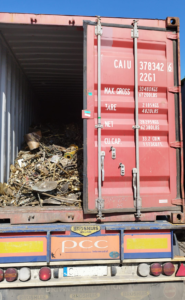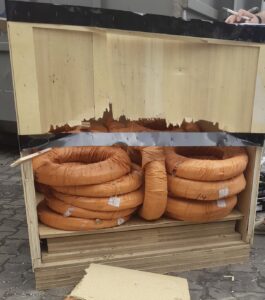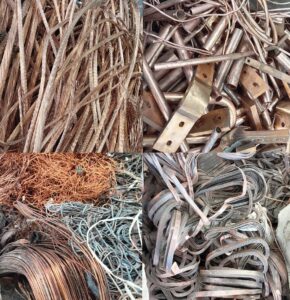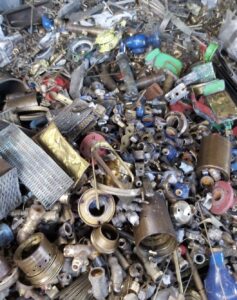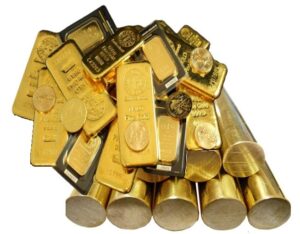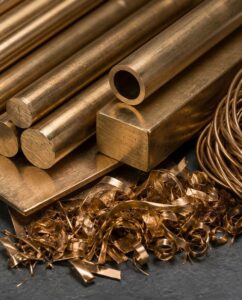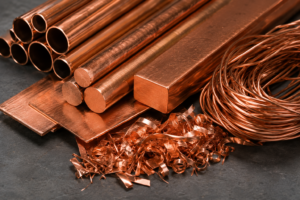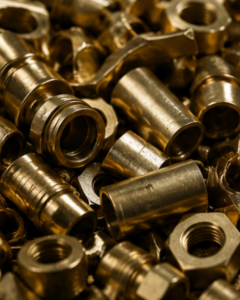


Brass is, after copper, one of the most expensive yet most commonly found materials in scrap metal. The price of brass in scrap depends on many factors. As it is an alloy of copper and zinc, one might expect that as the prices of these raw materials on the LME change (London Metal Exchange) Brass purchase prices will rise. Unfortunately, things do not always turn out as the market would expect. When analysing brass selling prices, a correlation can be observed between the way foundries purchase brass and the price of raw materials on the LME. The higher the price of copper on the LME, the lower the index to which the price of brass at foundries is linked. Conversely, the lower the LME, the higher the index. This behaviour on the part of foundries means that brass prices do not react as dramatically to fluctuations in metal prices on the LME as is the case with copper.
On the Polish market, we can see that companies operating in this sector dominate brass purchasing, which specialise in the appropriate preparation and subsequent resale of brass to end users. These companies act as intermediaries, purchasing brass and exporting it to Italy, Germany, other European countries and Asia, or sell it to Polish foundries, which – due to quality requirements and expectations regarding the preparation of the material – purchase brass from large companies capable of preparing the material in accordance with their needs.
Brass prices – the current situation
Brass prices in Italy and Germany fell significantly around 1.5 years ago. Italian and German foundries are purchasing considerably less brass than in previous years, offering much lower prices for brass relative to the LME than in earlier periods. This has resulted in brass exports to Italy virtually coming to a standstill. As for sales to eastern markets, such as Ukraine, we are also seeing a fall in demand there, mainly due to transport problems and reduced domestic demand. However, recent weeks have shown some signs of recovery, and the first orders at market prices from Italy and Germany offer hope of a turnaround.
As for Asian destinations are still in high demand. Prices in Asia, even taking into account the rising cost of transport, remain attractive compared to the European market. Companies from India, China, Pakistan and other Asian countries purchase all types of scrap, but are constantly raising their expectations regarding the quality and preparation of the material. The biggest problem with selling to Asia is the issue of transport time (which has increased significantly due to Houthi activities in the Red Sea) and the wait for payment. From the perspective of a non-ferrous metals trader, this process can take between 3 and 4 months, measured from the time the scrap is purchased until payment is received for the goods sold.
The Polish market, on the other hand, consists of many small foundries, a few larger operators and intermediaries. Brass scrap dealers often offer prices that are the same as, or higher than, those of local foundries. This is due to the economic slowdown in Europe, high energy, labour and production costs, and the need for foundries to compete on price for their end products with suppliers from Asia, Turkey and elsewhere. In Poland, too, we are seeing trends linked to changes in the way brass is purchased, depending on the price of copper on the LME. This is because Most of the Polish scrap metal market, including brokers, is driven by speculation, and when the price of copper on the LME falls, foundries struggle to purchase raw materials for production. In that case, they have to raise the purchase price relative to the LME to offset potential losses arising from speculation by their suppliers.

Forecasts
In my view In the coming weeks/months, the situation on the brass market is not expected to change significantly. Despite the war in Ukraine and the widespread awareness of increased production of ammunition and other military equipment, we are not seeing any rise in demand for brass. Italy and Germany are showing some signs of recovery, but there are as yet no indications of a price war over this material, which is being exported to Asia.
In my opinion, the biggest impact on the price of brass on the Polish scrap metal collection will be worth one zloty. If the zloty weakens ($ becomes more expensive), the price of brass in zloty terms will rise in real terms. If the zloty strengthens, the price of brass will fall.